Professional HR Guidance Timmins
Need HR training and legal expertise in Timmins that establishes compliance and reduces disputes. Prepare supervisors to apply ESA hours, overtime, and breaks; fulfill Human Rights accommodation duties; and align onboarding, coaching, and progressive discipline with detailed documentation. Standardize investigation protocols, secure evidence, and relate findings to OHSA/WSIB corrective actions. Select local, vetted specialists with sector experience, SLAs, and defensible templates that function with your processes. You'll see how to establish accountable systems that stand up under scrutiny.
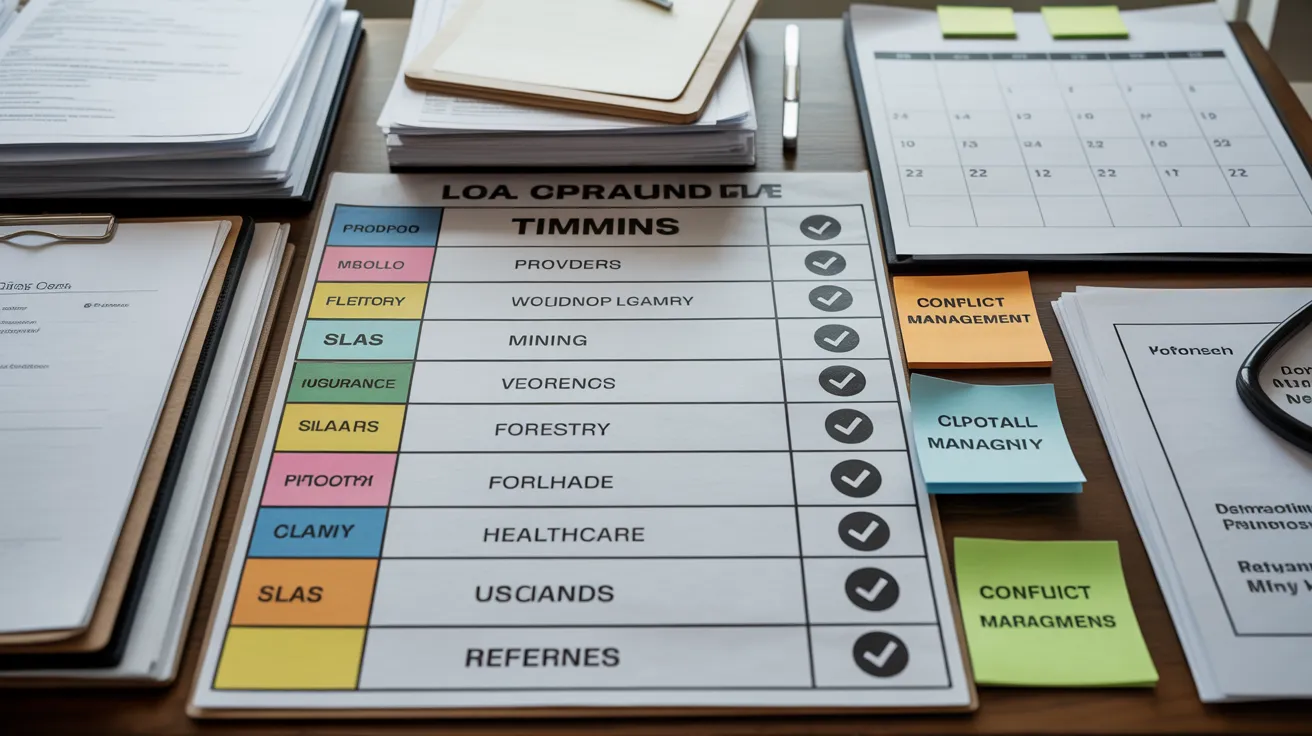
Essential Points
- Comprehensive HR education for Timmins companies covering workplace investigations, onboarding, performance management, and skills verification following Ontario legislation.
- Employment Standards Act support: comprehensive coverage of hours of work, overtime rules, and break entitlements, including documentation for employment records, work agreements, and separation protocols.
- Human rights protocols: covering accommodation processes, confidentiality measures, evaluation of undue hardship, and compliance-based decision making.
- Investigation procedures: planning and defining scope, evidence collection and preservation, unbiased interview processes, credibility assessment and analysis, and comprehensive action-oriented reports.
- Workplace safety alignment: OHSA due diligence practices, WSIB case processing and RTW program management, hazard prevention measures, and training protocol modifications linked to investigation findings.
The Importance of HR Training for Timmins Businesses
Even in a challenging labor market, HR training equips Timmins employers to mitigate risks, meet legal obligations, and establish accountable workplaces. You improve decision-making, systematize procedures, and minimize costly disputes. With specialized learning, supervisors maintain policy compliance, record workplace achievements, and address complaints early. You also align recruitment, onboarding, and coaching to close the skills gap, leading to dependable team execution.
Training clarifies roles, establishes metrics, and enhances investigations, which safeguards your business and staff. You'll refine retention strategies by aligning career advancement, recognition programs, and balanced scheduling to measurable outcomes. Data-informed HR practices help you predict workforce requirements, track attendance, and enhance safety measures. When leaders exemplify professional standards and convey requirements, you reduce turnover, support productivity, and safeguard reputation - key advantages for Timmins employers.
Navigating Ontario's ESA in the Real World
You need clear policies for working hours, overtime provisions, and break periods that comply with Ontario's Employment Standards Act and your company's operations. Implement proper overtime calculations, keep detailed time logs, and arrange mandatory statutory breaks and rest intervals. When employment ends, calculate appropriate notice, termination benefits, and severance amounts, keep detailed records, and adhere to payment schedules.
Hours, Overtime, and Breaks
Even as business demands vary, Ontario's Employment Standards Act (ESA) establishes specific rules on work hours, overtime periods, and required breaks. Create schedules that honor daily and weekly limits in the absence of valid written agreements and ESA-compliant averaging. Document all hours, including segmented shifts, necessary travel periods, and on-call responsibilities.
Start overtime compensation at 44 hours each week unless an averaging agreement is in place. Be sure to accurately compute overtime while using the appropriate rate, while keeping records of all approvals. Workers must receive no less than 11 consecutive hours off per day and 24 consecutive hours off weekly (or a 48-hour period over 14 days).
Make certain a 30‑minute unpaid meal break is given after no more than five consecutive hours. Oversee rest intervals between shifts, avoid excessive consecutive workdays, and convey policies explicitly. Check records regularly.
Rules for Termination and Severance Pay
Because endings carry legal risk, develop your termination procedure around the ESA's basic requirements and document every step. Review employment status, tenure, salary records, and any written agreements. Assess termination benefits: notice period or equivalent compensation, holiday pay, outstanding wages, and ongoing benefits. Apply just-cause standards carefully; perform inquiries, provide the employee an opportunity to provide feedback, and document findings.
Review severance entitlement on a case-by-case basis. When your Ontario payroll exceeds $2.5M or the staff member has served for more than five years and your operation is shutting down, perform a severance determination: one week per year of tenure, prorated, up to 26 weeks, calculated from regular wages plus non-discretionary pay. Issue a detailed termination letter, schedule, and ROE. Audit decisions for standardization, non-discrimination, and risk of reprisals.
Understanding Human Rights Compliance and Accommodation Requirements
You must fulfill Ontario Human Rights Code requirements by eliminating discrimination and managing accommodation requests. Develop clear procedures: analyze needs, request only necessary documentation, identify options, and document decisions and timelines. Implement accommodations successfully through cooperative planning, training for supervisors, and continuous monitoring to verify appropriateness and legal compliance.
Understanding Ontario Obligations
In Ontario, employers must comply with the Human Rights Code and make reasonable accommodations for employees to the point of undue hardship. You must identify limitations connected to protected grounds, review individualized needs, and document objective evidence supporting any limits. Ensure compliance of your policies with government regulations, including payroll compliance and privacy obligations, to maintain fair processes and legal data processing.
You're tasked with creating well-defined procedures for accommodation requests, addressing them quickly, and maintaining confidentiality of medical and personal information shared only when required. Train supervisors to recognize situations requiring accommodation and prevent unfair treatment or backlash. Maintain consistent criteria for determining undue hardship, weighing cost, external funding, and safety concerns. Maintain records of choices, rationale, and timelines to prove good-faith compliance.
Implementing Effective Accommodations
While obligations set the framework, execution determines compliance. Accommodation is implemented through linking individualized needs to job requirements, recording determinations, and evaluating progress. Start with an organized evaluation: confirm functional limitations, essential duties, and possible obstacles. Use evidence-based options-adjustable work hours, modified duties, remote or hybrid work, environmental modifications, and supportive technology. Participate in prompt, honest communication, set clear timelines, and assign accountability.
Apply a thorough proportionality assessment: examine efficacy, cost, safety and wellness, and operational effects. Maintain privacy guidelines-collect only required details; secure files. Prepare supervisors to spot indicators and communicate without delay. Test accommodations, assess performance measurements, and iterate. When restrictions arise, demonstrate undue hardship with concrete documentation. Communicate decisions tactfully, present alternatives, and perform periodic reviews to maintain compliance.
Establishing Results-Driven Employee Integration Programs
Given that onboarding establishes performance and compliance from the beginning, develop your program website as a organized, time-bound process that aligns policies, roles, and culture. Utilize a New Hire checklist to organize first-day requirements: tax forms, contracts, IT access, safety certifications, and privacy acknowledgments. Plan training meetings on employment standards, anti‑harassment, health and safety, and data security. Develop a 30-60-90 day plan with clear objectives and essential learning modules.
Establish mentor matching to speed up onboarding, reinforce policies, and detect challenges promptly. Supply job-specific protocols, occupational dangers, and resolution processes. Hold brief policy meetings in the first and fourth weeks to validate knowledge. Tailor content for Timmins operations, duty rotations, and legal obligations. Document participation, test comprehension, and record confirmations. Update using employee suggestions and review data.
Performance Management and Progressive Discipline
Establishing clear expectations initially sets the foundation for performance management and minimizes legal risk. This involves defining key responsibilities, objective criteria, and schedules. Link goals with business outcomes and record them. Schedule regular meetings to deliver immediate feedback, reinforce strengths, and improve weaknesses. Utilize measurable indicators, rather than subjective opinions, to prevent prejudice.
When work quality decreases, implement progressive discipline systematically. Begin with verbal warnings, followed by written warnings, suspensions, and termination if changes aren't achieved. Each disciplinary step needs corrective documentation that specifies the concern, policy guidelines, prior guidance, expectations, support provided, and timeframes. Provide training, support, and progress reviews to enable success. Record every meeting and employee feedback. Connect decisions to procedures and past practice to ensure fairness. Conclude the procedure with performance assessments and reset goals when improvement is shown.
Conducting Workplace Investigations the Right Way
Prior to receiving any complaints, you need to have a comprehensive, legally sound investigation process in place. Define activation points, designate an neutral investigator, and set timeframes. Issue a litigation hold to immediately preserve evidence: digital correspondence, CCTV, hardware, and paper files. Clearly outline confidentiality expectations and non-retaliation policies in written form.
Begin with a detailed plan encompassing allegations, policies affected, required documentation, and a systematic witness roster. Utilize standardized witness interviewing protocols, ask probing questions, and document factual, contemporaneous notes. Hold credibility determinations distinct from conclusions until you've confirmed statements against documentation and digital evidence.
Preserve a solid chain of custody for each piece of evidence. Deliver status updates without compromising integrity. Generate a precise report: accusations, procedures, data, credibility evaluation, determinations, and policy results. Then execute corrective steps and monitor compliance.
Health and Safety Standards: WSIB and OHSA Compliance
Your investigation methods need to align seamlessly with your health and safety framework - what you learn from incidents and complaints should guide prevention. Tie all findings to remedial measures, training updates, and technical or management safeguards. Incorporate OHSA requirements within processes: hazard identification, safety evaluations, employee involvement, and management oversight. Record choices, timeframes, and confirmation procedures.
Align claims processing and modified work with WSIB oversight. Create consistent reporting triggers, paperwork, and work reintegration protocols enabling supervisors to respond swiftly and consistently. Utilize early warning signs - near misses, first aid incidents, ergonomic concerns - to inform evaluations and safety meetings. Verify safety measures through field observations and key indicators. Plan management reviews to assess regulatory adherence, recurring issues, and cost patterns. When compliance requirements shift, update protocols, conduct retraining, and clarify revised requirements. Keep records that meet legal requirements and readily available.
Selecting Local HR Training and Legal Support Partners
Although provincial regulations determine the baseline, you obtain genuine results by choosing Timmins-based HR training and legal experts who know OHSA, WSIB, and Northern Ontario workplaces. Emphasize local collaborations that exhibit current certification, sector experience (mining, forestry, healthcare), and verified outcomes. Perform vendor evaluation with defined criteria: regulatory proficiency, response times, conflict management capacity, and bilingual service where relevant.
Check insurance coverage, fee structures, and project scope. Request compliance audit examples and incident response protocols. Review compatibility with your health and safety board and your back-to-work initiative. Implement well-defined reporting channels for concerns and investigations.
Review a few vendors. Get testimonials from Timmins employers, rather than just generic reviews. Define service level agreements and reporting timelines, and add contract exit options to ensure continuity and cost management.
Practical Tools, Templates, and Training Resources for Team Development
Start strong by standardizing the essentials: well-structured checklists, concise SOPs, and conforming templates that meet Timmins' OHSA and WSIB standards. Build a master library: onboarding scripts, incident review forms, adjustment requests, back-to-work plans, and occurrence reporting flows. Tie each document to a designated owner, evaluation cycle, and version control.
Design development roadmaps by role. Utilize capability matrices to verify mastery on safety protocols, workplace ethics, and information management. Connect modules to potential hazards and legal triggers, then plan refreshers quarterly. Embed scenario drills and quick evaluations to confirm understanding.
Implement feedback frameworks that direct one-on-ones, coaching notes, and corrective action letters. Monitor progress, results, and remedial actions in a monitoring system. Ensure continuity: evaluate, reinforce, and modify templates as compliance or business requirements shift.
FAQ
How Do Businesses in Timmins Plan Their HR Training Budget?
You manage budgets through annual allowances based on headcount and essential competencies, then building backup resources for emergent learning needs. You identify regulatory needs, prioritize critical skills, and arrange staggered learning sessions to optimize cash flow. You establish long-term provider agreements, implement blended learning approaches to lower delivery expenses, and ensure manager sign-off for learning courses. You track performance metrics, implement regular updates, and redistribute unused funds. You document procedures to ensure consistency and regulatory readiness.
Northern Ontario HR Training: Grants and Subsidies Guide
Access various funding programs like the Ontario Job Grant, Canada-Ontario Job Grant, and Canada Training Benefit for employee upskilling. In Northern Ontario, explore various regional initiatives including NOHFC workforce streams, FedNor programs, and Indigenous Skills and Employment Training. Consider Training Subsidies via Employment Ontario, including Job Matching and placements. Utilize Northern Granting tools from municipal CFDCs for top-ups. Consider eligibility (SME focus), stackability, and cost shares (typically 50-83%). Harmonize training plans, demonstrated need, and results to maximize approvals.
What's the Most Effective Way for Small Teams to Implement Training Without Business Disruption?
Plan training by dividing teams and using staggered sessions. Develop a quarterly schedule, identify critical coverage, and confirm training windows in advance. Utilize microlearning blocks (10-15 minutes) during shifts, in lull periods, or independently via LMS. Switch roles to maintain service levels, and designate a floor lead for continuity. Standardize consistent agendas, prework, and post-tests. Track attendance and productivity results, then adjust cadence. Announce timelines in advance and implement participation expectations.
Where Can I Access Bilingual English-French HR Training in the Local Area?
Yes, you can access local bilingual HR training. Envision your team participating in bilingual workshops where Francophone facilitators jointly facilitate workshops, alternating smoothly between English and French for procedural updates, internal reviews, and respectful workplace training. You get complementary content, uniform evaluations, and straightforward compliance guidance to Ontario and federal requirements. You'll organize customizable half-day modules, measure progress, and record participation for audits. Have providers confirm facilitator credentials, language precision, and ongoing coaching access.
How Can Timmins Businesses Measure HR Training ROI?
Measure ROI through quantifiable metrics: improved employee retention, lower time-to-fill, and reduced turnover costs. Observe performance metrics, mistake frequencies, workplace accidents, and absenteeism. Analyze before and after training performance reviews, advancement rates, and job rotation. Measure compliance audit pass rates and grievance resolution times. Link training investments to benefits: lower overtime, reduced claims, and improved customer satisfaction. Use control groups, cohort studies, and quarterly dashboards to validate causality and sustain executive support.
Wrapping Up
You've mapped out the crucial elements: compliance, HR processes, performance management, safety protocols, and investigations. Now envision your team working with synchronized procedures, well-defined forms, and skilled supervisors functioning as one. Observe issues handled efficiently, documentation maintained properly, and audits completed successfully. You're close to success. A final decision awaits: will you establish local HR expertise and legal guidance, tailor systems to your operations, and schedule your initial session now-before another issue surfaces requires your response?